Games That Help Seniors Build Cognitive Skills
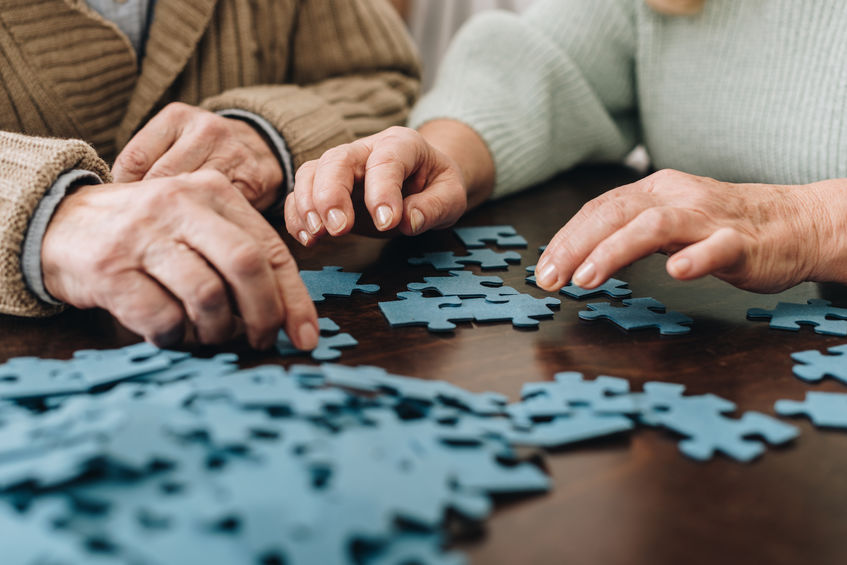
Ashford Hall2020-08-02T12:38:02-05:00Fun and challenging brain games such as puzzles can help seniors improve cognitive skills, avoid boredom, and develop friendships through shared interests.
Fun and challenging brain games such as puzzles can help seniors improve cognitive skills, avoid boredom, and develop friendships through shared interests.
A memory care facility offers seniors with Alzheimer’s or dementia more specialized care than assisted living communities. Here’s how to find the right fit.
Age and genetics are dementia risk factors that can’t be changed. But some risk factors can be managed to reduce the risk of memory loss.
Music therapy is an effective treatment used to improve memory recall, elevate mood, and stimulate the mind of seniors with dementia and Alzheimer's.
Transitioning a loved one into a memory care facility requires careful planning. Finding the right facility and dealing with strong emotions takes time.
Alzheimer’s symptoms affect millions. Signs don’t only include memory loss. The disease occurs in three stages, with the third one being the most severe.
Cardiovascular disease has been associated with an increased risk for Alzheimer’s disease due to plaque buildup and genetic factors.
Memory loss is not always a part of aging. Prompt diagnosis and treatment of progressively worsening memory loss can be beneficial.
Art touches all the senses and helps keep the brain active. Exercising the brain can improve cognitive skills and lead to a longer and happier life.
Helping a loved one living with Alzheimer’s requires patience and creativity. As the condition worsens, additional support may be needed.

2021 Shoaf Drive
Irving, Texas 75061
Call us: (972) 579-1919
Admissions: (469) 441-6878


Copyright 2026 | Ashford Hall Skilled Nursing and Rehabilitation